How gas travels: pipelines and LNG
Gas is hard to move. Pipelines carry it within continents; across oceans it must be cooled to −162°C to become liquefied natural gas (LNG), shipped and turned back into gas. That cost and capacity shape every gas market.
The LNG chain
Liquefaction
Export plants chill gas into liquid. They are expensive and take years to build.
Shipping
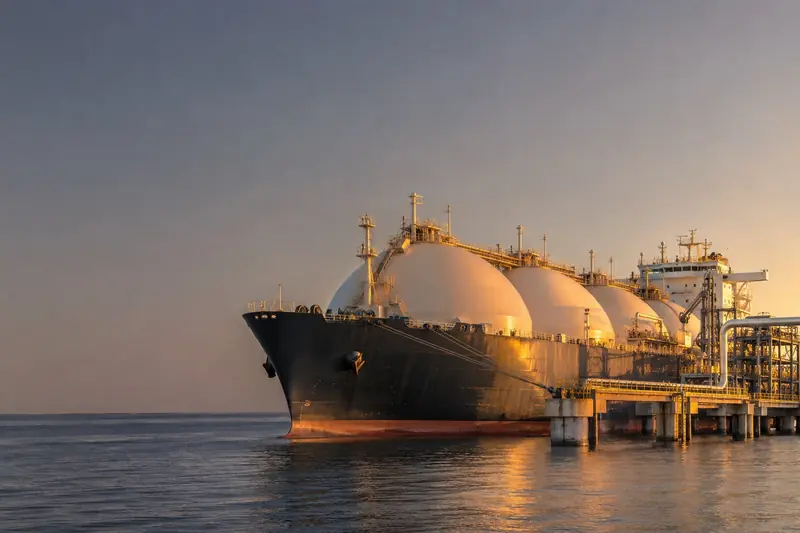
Specialised tankers carry LNG worldwide.
Regasification
Import terminals turn LNG back into gas for pipelines.
Flexibility
US cargoes can go to Europe or Asia — whichever pays more.
Why it matters for prices
The cost of liquefying and shipping sets a natural gap between US and overseas prices. When LNG supply is disrupted — as with Gulf exports in 2026 — that gap can widen enormously, because new export capacity cannot be built quickly.
- Watch LNG export plant outages.
- Remember LNG links but does not equalise regional prices.
- Wikipedia — Liquefied natural gas ↗
- Baringa — European Winter Gas Outlook 2026–27 ↗
- OGJ — US LNG exports on track to top 120 million tonnes ↗
Educational content, not investment or trading advice. Trading leveraged products carries a high risk of losing money.