What happened
BMW announced that solar-produced aluminium from Emirates Global Aluminium would supply nearly half the annual requirement of the light-metal foundry at Landshut. A casting plant purchases a metal specification, yet customers and reporting systems can also care about the electricity embedded in that metal. Those attributes travel on different records.
Aluminium is widely used in cars because it is light, which helps efficiency and range. But producing it takes large amounts of electricity, so its carbon footprint depends heavily on how that electricity is generated.
In February 2021 BMW announced it would source aluminium made with solar power from Emirates Global Aluminium (EGA), based in the United Arab Emirates. EGA was already a long-standing supplier of primary aluminium to BMW.
The agreement covered 43,000 tonnes of aluminium in 2021 under a contract worth a triple-digit million-euro sum. BMW said this would meet almost half the annual needs of the light-metal foundry at its plant in Landshut, Germany.
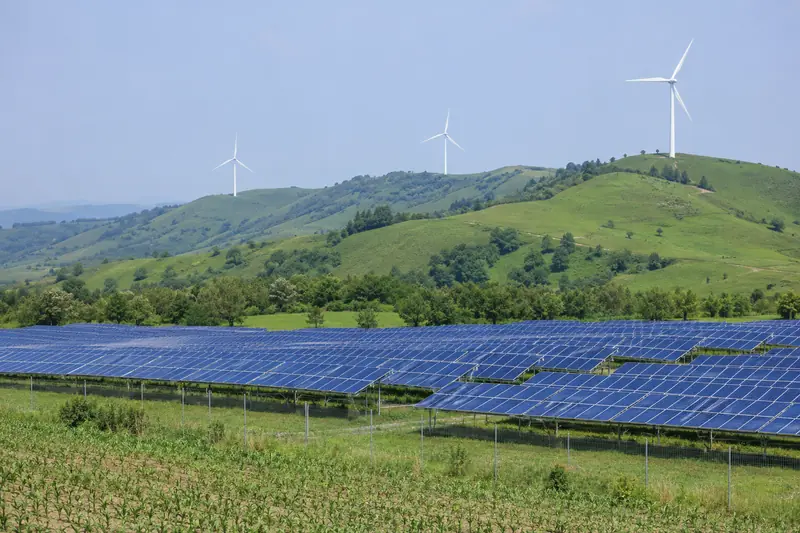
EGA was the first company in the world to produce aluminium commercially using solar electricity, which came from the Mohammed bin Rashid Al Maktoum Solar Park in Dubai.
According to The Driven, the solar park was to supply 560,000 megawatt-hours a year to EGA’s smelter, enough to produce 40,000 tonnes of aluminium, which EGA markets as CelestiAL.
At Landshut the metal is cast into body and drivetrain parts, including components for electric drives.
BMW said it also planned to source more aluminium made with green power in the long term, saving around 2.5 million tonnes of CO2 by 2030, and that it aimed to cut CO2 emissions in its supplier network by 20 percent by 2030.
The deal was an important milestone for both companies and showed how industrial suppliers in the Gulf can contribute to cleaner global supply chains.
The exhibit compares the amount BMW agreed to buy with the amount of aluminium the solar power supply was expected to support, showing how closely matched the deal was to EGA’s solar production.
Supply-chain decisions increasingly consider not only price and quality but also the carbon footprint of materials.
For a car maker, emissions from suppliers can be much larger than emissions from its own factories, so purchasing decisions can have a big impact.
Buying low-carbon aluminium requires reliable tracking. The buyer needs evidence that the material it receives really was produced with renewable power.
Long-standing supplier relationships help here, because trust and shared systems make it easier to verify claims.
Investors who focus on environmental, social and governance factors increasingly look at how companies manage emissions across their supply chains.
The deal also benefited EGA, giving it a major customer for its new solar aluminium and showing that demand exists for lower-carbon metals.
Since then, other car makers and manufacturers worldwide have signed agreements for low-carbon aluminium and steel.
The agreement also reflects the strength of the UAE’s industrial sector. EGA is one of the world’s largest aluminium producers, and its access to large-scale solar power allowed it to offer a new kind of product.
For BMW, buying from a supplier able to deliver significant volumes reliably was important, since the foundry at Landshut needs steady supplies.
The case shows that sustainability goals can create new markets for suppliers who are able to invest in cleaner production.
For students, a useful question is how much more a buyer should be willing to pay for low-carbon materials, and how that cost should be shared along the supply chain.
Another question is how companies can verify environmental claims made by suppliers in different countries.
As more industries seek low-carbon materials, suppliers that can offer them at scale may gain an advantage, and buyers that secure supplies early may find it easier to meet their own targets.
That makes early agreements like this one a form of strategic positioning as well as purchasing.
Key moments
Energy source becomes a purchasing attribute
BMW announces solar-produced aluminium supply
Material feeds the Landshut light-metal foundry
Sources: BMW Group; The Driven, citing DEWA and EGA.
The trade-offs at the heart of the case
A closer look
A buyer can receive two physically interchangeable ingots with different electricity records. The receiving foundry needs a method of matching the environmental claim to the quantity actually procured and transformed. If some of the metal is returned as scrap, establish whether the claim follows the original delivery, the finished casting or a separately recorded allocation. That answer determines what a customer can reasonably be told.
The alternative on the table
For comparison, consider the option to buy the conventional alloy and fund a separate emissions project. The related case “Buying discarded fishing nets for automotive trim” supplies a useful reference point. BMW described recycling discarded fishing nets into material suitable for vehicle trim. A tonne of aluminium and a moulded plastic component have different emissions boundaries. Procurement should compare the material actually specified, the evidence accompanying it and whether the associated attribute can be claimed by more than one buyer.
For your seminar, paper or interview
- Q1
How should the foundry follow an electricity-origin claim through a batch of aluminium?
- Q2
Which finding in the records on metal batches traced to the energy claim would persuade you to buy the conventional alloy and fund a separate emissions project?
- Q3
Compare this decision with “Buying discarded fishing nets for automotive trim”. Which difference between the cases would change your recommendation?
- Green procurement
- Supplier partnerships
- Carbon reduction
- Materials strategy
How we would approach it
Simplifying Finance’s opinion, offered as a starting point for debate, not as fact or investment advice.
We think BMW’s agreement with Emirates Global Aluminium is a good example of using purchasing power to cut emissions. Aluminium is energy-intensive, so the source of electricity matters a great deal. Partnering with a long-standing supplier that had pioneered solar aluminium let BMW act quickly at scale.
Buy by carbon content
Make emissions part of purchasing decisions.
Work with trusted suppliers
Build on existing relationships.
Track the material
Link claims to the metal actually used.
What this plan gives up
Low-carbon materials may cost more and need careful tracking.
The strongest counter-argument
Some argue funding separate emission projects would be cheaper.
Metrics to watch
- CO2 per tonne of aluminium
- Share of green material purchased
Propose your solution
Pick a discussion question and set out what you would do, why, and what it would cost. Strong, well-argued answers are reviewed and published below with your first name and programme.
Published solutions
Loading published solutions…
- BMW Group PressClub • Harnessing the power of the desert sun: BMW Group sources aluminium produced using solar energy ↗
- BMW Group • BMW Group Plant Landshut History ↗
- BMW Group • Source document — Does the source of aluminium change the purchase decision ↗
- BMW Group PressClub • BMW Group sources aluminium produced using solar energy ↗
- CNBC • BMW will now use aluminum made with solar power ↗
- The National • BMW buys first aluminium made using solar energy from EGA ↗
- The Driven • BMW begins sourcing aluminium produced using solar ↗
- Photo: Rio Tinto Arvida aluminum complex in Jonquière, QC by Quintin Soloviev, CC BY 4.0 (cropped and resized) ↗
Figures are as reported by the companies or cited outlets as of 22 November 2026. Check the source before quoting. Corrections: let us know through the solution form.