What happened
Porsche described the facility as a pilot and discussed approximately 130,000 litres a year in that phase. The number was an intended production level, distinct from audited sales or a realised cost per litre. The process links electricity, hydrogen and carbon inputs to fuel synthesis. If one stage operates less reliably than another, installing more equipment in the wrong place can increase capital employed without raising saleable output.
A scale-up budget should follow a litre from inputs to a customer. Measure electricity consumed per acceptable litre, carbon sourcing, conversion yields, plant uptime, logistics and any premium the customer will contract to pay. A favourable average wind resource cannot guarantee affordable electricity for every required operating hour. Storage and flexibility may help, at a cost. Environmental claims require a lifecycle boundary that follows both electricity and carbon sources.
Haru Oni is a pilot plant near Punta Arenas in the Magallanes region of southern Chile. It was developed by HIF Global with partners including Porsche, Siemens Energy and ENAP, and opened in December 2022.
The region has some of the strongest and most consistent winds in the world, which makes it attractive for producing renewable electricity.
The plant uses wind power to split water into hydrogen through electrolysis. The hydrogen is combined with carbon dioxide captured from the air to make methanol, which is then converted into synthetic petrol, known as e-fuel.
Porsche described the plant as a pilot and discussed production of about 130,000 litres a year in that phase. That is an intended level, not a record of audited sales.
For comparison, a single large petrol station may sell several million litres a year, so the pilot’s output is tiny.
Porsche’s interest lies in e-fuels for existing combustion-engine cars and for motorsport, since synthetic fuels could reduce net emissions without changing engines.
Chile has a national green hydrogen strategy and hopes to become a major exporter, using its wind and solar resources.
Similar projects are being developed in Australia, the Middle East and Europe, but costs remain much higher than for fossil fuels.
The cost of e-fuels depends mainly on the cost of renewable electricity, the efficiency of electrolysers and the cost of capturing carbon dioxide. At pilot scale, all of these are much higher than they would be in a large plant.
That makes it difficult to estimate commercial costs from pilot results. Investors look for evidence of how costs might fall with scale and experience, much as solar panel costs fell over the past two decades.
HIF has announced plans for much larger plants in Chile and other countries, but these depend on financing, permits and long-term buyers.
Transporting e-fuels from Patagonia to markets in Europe and elsewhere adds shipping costs, though liquid fuels are easier to transport than hydrogen gas.
Environmental groups have raised concerns about the impact of large wind farms on Patagonian landscapes and wildlife, which could affect future expansion.
For students, the case shows how companies use pilot projects as real options: a small investment that provides information before deciding whether to commit much larger sums.
It also highlights the difference between a demonstration of technology and a demonstration of commercial viability.
The pilot’s results will help determine whether Magallanes becomes a major centre for green fuels or remains a niche producer.
Chile’s government has offered support for green hydrogen projects, including land and development funding.
Whatever the outcome, the project has already provided valuable data on producing fuels from wind in a remote location.
Those data will shape future investment decisions.
Key moments
Partners begin work on the integrated fuel pilot.
A vehicle is fuelled with the first synthetic fuel at the official opening.
Source: Porsche, cited in the case.
The trade-offs at the heart of the case
Two pilots with different customers for the evidence
The Salares Altoandinos partners need to know what their process can extract from variable brines and convert into saleable material. Haru Oni’s partners need to know whether an integrated chain can repeatedly produce a fuel that customers will buy at a sustainable price. Both pilots can generate information valuable enough to warrant spending before full commercial financing exists. The signal from one good output sample is nevertheless weaker than the signal from a campaign covering input variation, downtime and customer acceptance. The buyers of the evidence are different. A mine lender may demand reserve and process evidence, while a fuel offtaker may value consistent specification and a credible delivery schedule. Ask which signature becomes obtainable after a successful test. If nobody will change a commitment, the test may be interesting without resolving the financial decision.
Our assessment
I would use the pilot to identify the most expensive uncertainty that another operating campaign can resolve. Secure a customer agreement with a meaningful volume and price before funding a full-scale train. A demonstration customer may pay for learning and publicity that ordinary buyers will value differently. A commercial forecast must earn the right to carry that premium forward.
For your seminar, paper or interview
- Q1
Which result from the pilot would most change your commercial cost estimate?
- Q2
How would you value a customer’s option to buy future volumes?
- Q3
What evidence is needed to compare lifecycle emissions with another fuel?
- Q4
What would you need to observe for the next commitment to become irreversible?
- Q5
How would a weaker signal, or a lost selling season during testing, change the value of waiting?
- Green hydrogen
- Pilot projects
- Scale-up risk
- Corporate partnerships
How we would approach it
Simplifying Finance’s opinion, offered as a starting point for debate, not as fact or investment advice.
We think Haru Oni is a valuable test of whether wind-powered synthetic fuels can be produced in Patagonia. The pilot’s small volumes are far from commercial scale, so its main value lies in learning about costs and technology before larger investments.
Measure costs
Track the real cost per litre.
Scale in stages
Expand only after pilot results.
Secure buyers
Sign offtake agreements early.
What this plan gives up
Pilots reduce uncertainty but rarely show commercial costs.
The strongest counter-argument
Some argue e-fuels are too expensive compared with electric vehicles.
Metrics to watch
- Cost per litre
- Plant uptime
Propose your solution
Pick a discussion question and set out what you would do, why, and what it would cost. Strong, well-argued answers are reviewed and published below with your first name and programme.
Published solutions
Loading published solutions…
- Porsche · Haru Oni opening and pilot objectives ↗
- Porsche · Construction plan and project partners ↗
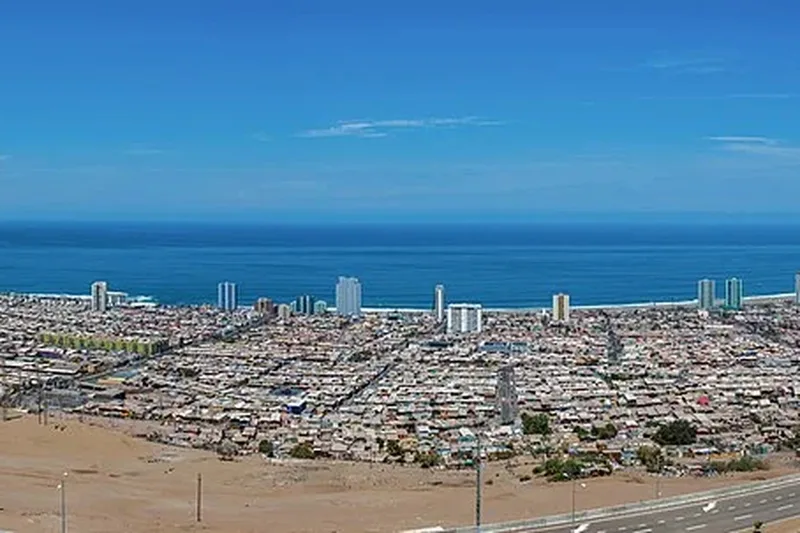
- Photo: Punta Arenas panorama 1 by Fredlyfish4, CC BY-SA 4.0 (cropped and resized) ↗
Figures are as reported by the companies or cited outlets as of 22 November 2026. Check the source before quoting. Corrections: let us know through the solution form.