What happened
The public works ministry inaugurated the Pirque reserve in November 2020. It reported six tanks with a combined reserve of 1.5 million cubic metres. Government material describes an increase in production autonomy from eleven to thirty-four hours during turbidity events. The additional twenty-three hours are a buffer for a defined disruption. A claim of universal protection for every Santiago household under every emergency would go beyond that design statement.
The loss avoided is concentrated in events that outlast the old reserve. A six-hour interruption already covered by the former system contributes little incremental benefit. An event lasting twenty hours can be largely bridged by the extension. An event longer than thirty-four hours can still interrupt service, although later and potentially for less time. Demand, the starting water level and the condition of the distribution network matter in every case.
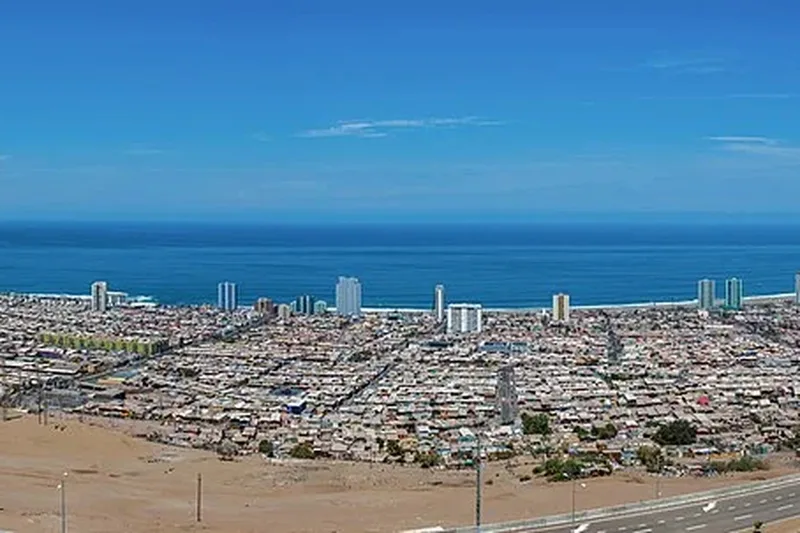
Santiago, Chile’s capital, gets most of its drinking water from the Maipo River, which flows from the Andes. Aguas Andinas, the main water utility for the city, treats and distributes the water.
During heavy storms, especially when warm rain falls at high altitude, the river can carry so much mud and sediment, called turbidity, that treatment plants must stop taking in water.
Several such events in the 2010s caused widespread water cuts affecting large parts of Santiago, prompting criticism of the utility and pressure from regulators.
In November 2020 the public works ministry inaugurated the Pirque reserve: six tanks storing a combined 1.5 million cubic metres of water.
Government material described an increase in production autonomy from 11 to 34 hours during turbidity events, meaning the city could keep supplying water for longer while the river was unusable.
The investment works like insurance. It costs money every year whether or not a storm occurs, but it reduces the damage when one does.
Regulated utilities in Chile recover approved investments through tariffs, so the cost is ultimately shared by customers.
Cities worldwide, from Cape Town to Melbourne, have invested in water storage and diversification as climate change makes extreme weather more frequent.
The tanks store treated drinking water, so during a turbidity event the city can draw on the reserve while treatment plants wait for river conditions to improve.
Climate change is expected to make such events more frequent. Higher snow lines mean that more precipitation falls as rain at high altitude, increasing runoff and sediment in rivers.
At the same time, central Chile has experienced a long drought since about 2010, which has reduced river flows and reservoir levels. Storage tanks do not solve drought, which requires new sources such as desalination or water reuse.
Aguas Andinas is controlled by an international water company and listed on the Santiago Stock Exchange, so its investment decisions are watched by shareholders as well as regulators.
For students, the case shows how to think about the value of resilience: the investment is justified by the losses it avoids, not by new revenue.
Estimating those avoided losses requires data on the frequency of events, the number of people affected and the cost of each hour without water.
Other utilities around the world use similar reasoning to justify flood defences, backup power and spare equipment.
The reserve’s performance during future storms will show whether the investment delivers the protection it promised.
Regulators can also require utilities to report outages, which helps the public judge whether resilience is improving.
For millions of residents, its value is measured simply in whether taps keep running during storms.
That is the standard by which the investment will be judged.
Residents will notice the difference most during storms.
Key moments
The existing system has about eleven hours of production autonomy in the specified disruption.
Six new tanks are inaugurated, taking stated autonomy to 34 hours.
Source: Chile’s public works ministry, cited in the case.
The trade-offs at the heart of the case
Water storage and earthquake insurance both buy time
Pirque’s reserve can maintain service while turbid river water clears. Chile’s catastrophe cover can deliver money while authorities assess physical damage and arrange longer-term funding. One asset stores water and one transfers financial risk, yet neither promises to remove the entire underlying loss. Match the time profile of protection to the time profile of need. A tank that empties before the intake reopens and a payout too small for a badly affected region leave different residual obligations. Size the backup after modelling those residuals, since adding each instrument’s maximum benefit separately can count the same hours or pesos twice. The strongest comparison is a set of realistic event paths showing the first moment at which the public service or the public cash balance again becomes constrained.
Our assessment
I would value the reserve using the duration distribution of past and plausible future events, then test demand management and smaller distributed reserves on the same basis. Utility revenue understates the social cost of an outage to a hospital, household or restaurant. A regulator deciding how to recover investment through tariffs should identify those wider benefits explicitly and preserve performance incentives for keeping the reserve ready.
For your seminar, paper or interview
- Q1
Which event durations contribute most to the value of the extension?
- Q2
How would lower overnight consumption change the operating plan?
- Q3
Who should bear the cost of reserve readiness during a long period without an outage?
- Q4
How would the decision change if the two adverse events were correlated or could occur together?
- Q5
What additional value should the decision maker assign to avoiding a cash shortage during the severe event?
- Water utility resilience
- Climate adaptation
- Regulated utilities
- Service continuity
How we would approach it
Simplifying Finance’s opinion, offered as a starting point for debate, not as fact or investment advice.
We think the Pirque reserve was a sensible investment in resilience. Storms that muddy the Maipo River had repeatedly cut water to millions of people in Santiago, and stored water reduces that risk, though it does not solve long-term drought.
Measure resilience
Track hours of autonomy.
Plan for drought
Combine storage with new sources.
Communicate
Inform residents during events.
What this plan gives up
Storage protects supply but requires large upfront spending.
The strongest counter-argument
Some argue the utility should have acted sooner after earlier outages.
Metrics to watch
- Number of supply cuts
- Hours of autonomy
Propose your solution
Pick a discussion question and set out what you would do, why, and what it would cost. Strong, well-argued answers are reviewed and published below with your first name and programme.
Published solutions
Loading published solutions…
- Ministry of Public Works · Inauguration of Pirque reserves ↗
- Aguas Andinas · Pirque project and system autonomy ↗
- Photo: Río Maipo by raulito19782001 from Santiago, Chile, CC BY 2.0 (cropped and resized) ↗
Figures are as reported by the companies or cited outlets as of 22 November 2026. Check the source before quoting. Corrections: let us know through the solution form.