What happened
Chile’s official notice in November 2025 concerned the environmental assessment of the Kimal–Lo Aguirre high-voltage direct-current project. The planned line connects northern and central parts of the system. Its 3,000 MW transfer rating is a ceiling on instantaneous transfer. An environmental milestone is neither commercial operation nor proof that the economic benefit equals that rating multiplied by every hour of the year.
For a first approximation, match hourly northern surpluses with receiving-end demand, feasible generation displaced and transmission losses. For a serious appraisal, allow the line to change prices at both ends. A price spread observed while the network is congested can shrink substantially once a large new line opens. Multiplying the full historic spread by all new transfers would value each unit as though the project had never altered the market.
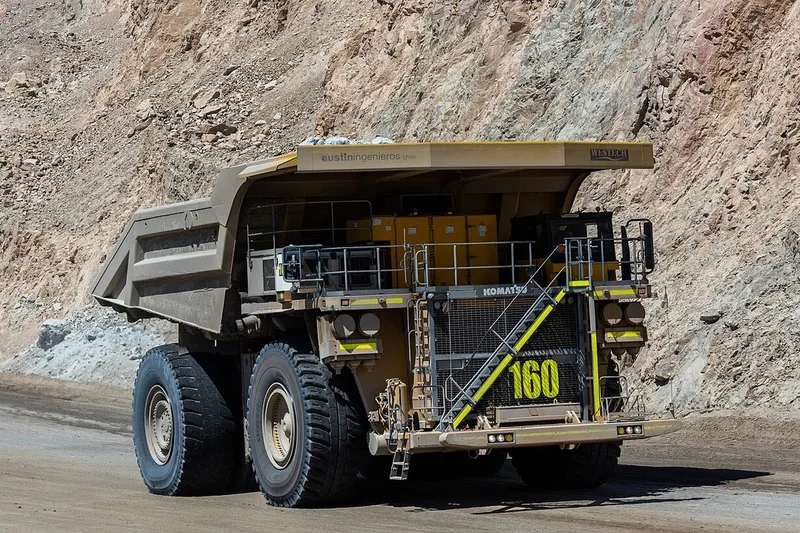
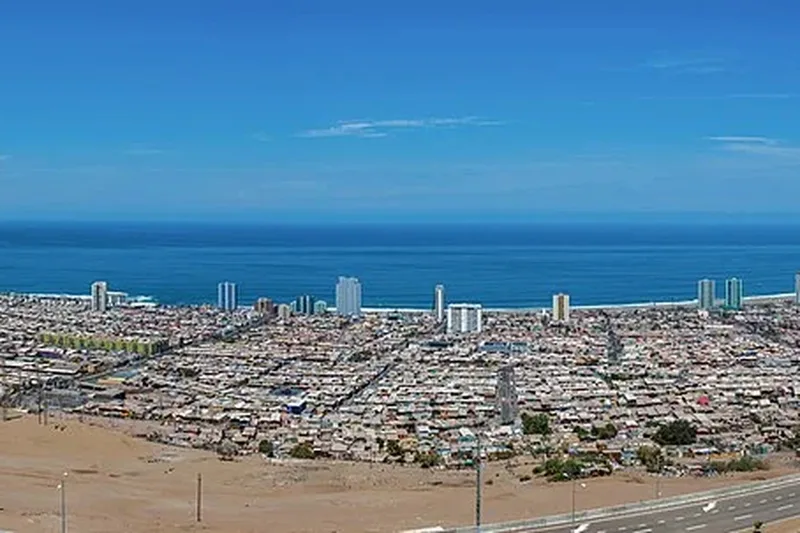
Chile’s best solar resources are in the northern deserts, while most electricity demand is in central Chile around Santiago. Limited transmission capacity means that solar power is sometimes curtailed, or wasted, because it cannot reach consumers.
Kimal–Lo Aguirre will be Chile’s first high-voltage direct current line, running roughly 1,340 to 1,500 kilometres, depending on the source, from the Kimal substation in Antofagasta to Lo Aguirre near Santiago. It is designed to carry 3,000 MW at 600 kV.
Direct current is more efficient than alternating current over very long distances, because it loses less energy and requires fewer conductors.
In December 2021 the grid operator awarded the project to a consortium of Transelec, ISA Inversiones Chile and China Southern Power Grid International, later called Conexión Energía. The operator’s reference investment was about US$1.48 billion.
The consortium later estimated the cost at about US$2 billion, and it obtained US$480 million of green financing from HSBC.
In November 2025 the environmental assessment agency recommended approval. Operation was expected to begin around 2029.
Transmission companies in Chile earn regulated revenue set in the tender, which provides stable cash flows once lines are built but leaves them exposed to construction risk.
Long-distance HVDC lines are used in China, Brazil and Europe to move renewable power from remote regions to cities.
Curtailment is a costly problem for renewable generators. When transmission lines are full, the grid operator must reduce output from some plants, and the energy is lost. Chile has recorded significant curtailment of solar and wind power in recent years, especially in the north.
New transmission lines can reduce curtailment, lower electricity prices in central Chile and make better use of renewable investments already built.
However, transmission projects take many years to plan, approve and build. Environmental assessments, land negotiations and consultations with communities along the route can cause delays.
Communities along the route raised concerns about the visual impact of tall towers, effects on farmland and protected areas, and the benefits they would receive from the project.
The project’s owners will be paid a regulated return based on the value set in the tender. If construction costs exceed expectations, their returns fall, since the payment is largely fixed.
China Southern Power Grid’s involvement reflects growing Chinese investment in Latin American electricity, including its purchase of a stake in Transelec in 2018.
For students, the case shows how infrastructure that seems purely technical has financial, social and geopolitical dimensions.
It also illustrates why regulators use competitive tenders: they reveal the lowest payment that investors will accept to build and operate a line.
Its completion will be one of the most important milestones in Chile’s plan to decarbonise its power system.
Until then, generators in the north will continue to face periods when their output cannot reach the main centres of demand.
For generators, the timing of completion affects revenue: every year of delay means more curtailed energy and lower prices in the north.
Developers planning new solar and wind farms therefore follow the project’s progress closely.
Lenders also consider transmission constraints when deciding whether to finance new renewable plants in the region.
The project’s cost, timing and performance will shape investment decisions across Chile’s power sector for years.
Chile’s grid operator has identified further transmission needs beyond this line, as renewable capacity in the north keeps growing.
Planning those projects early could avoid repeating the long gap between new generation and the lines needed to carry it.
Transmission is often called the missing link of the energy transition, and this project shows why.
Without it, cheap renewable power cannot reach the people and businesses that need it.
Key moments
A 3,000 MW HVDC connection is proposed.
The official environmental decision notice is published.
Sources: Coordinador Eléctrico Nacional via pv tech; Conexión Energía via Dialogue Earth.
The trade-offs at the heart of the case
Our assessment
I would separate the regulated revenue case from the social cost-benefit case. Payments under transmission rules belong in the former. Avoided fuel, curtailment and reliability effects belong in the latter, with care around transfers between producers and customers. Track converter readiness, access and downstream network works against one integrated schedule. A finished section of line offers little dispatch value while either terminal remains unavailable.
For your seminar, paper or interview
- Q1
Why might the most congested historic hour overstate future savings?
- Q2
Who benefits if wholesale prices converge across the two ends?
- Q3
Which missing connection would delay the first useful transfer?
- Q4
Which observations would verify demand at the time and location the capacity is available?
- Q5
Would a smaller fixed commitment or a guaranteed unit margin give better downside protection?
- Transmission investment
- Regulated returns
- Renewable integration
- Foreign investment
How we would approach it
Simplifying Finance’s opinion, offered as a starting point for debate, not as fact or investment advice.
We think Kimal–Lo Aguirre is essential for Chile’s energy transition, because solar power in the north is often wasted for lack of transmission. But long construction times and community opposition mean the benefits will arrive later than many generators need.
Engage communities
Address concerns along the route.
Keep to schedule
Avoid delays that raise costs.
Plan the grid
Coordinate with storage and new generation.
What this plan gives up
New lines reduce curtailment but take years to build.
The strongest counter-argument
Some communities object to the visual and environmental impact.
Metrics to watch
- Construction progress
- Solar curtailment in the north
Propose your solution
Pick a discussion question and set out what you would do, why, and what it would cost. Strong, well-argued answers are reviewed and published below with your first name and programme.
Published solutions
Loading published solutions…
- Biblioteca del Congreso Nacional · Environmental decision notice ↗
- Coordinador Eléctrico Nacional · Kimal–Lo Aguirre design capacity ↗
- pv tech • Two consortiums battle over 3GW Chilean power line tender ↗
- Dialogue Earth • Chile’s longest power line could speed up the shift to renewables ↗
- CIGRE Electra • The Kimal–Lo Aguirre HVDC project ↗
- Ex-Ante • Environmental agency recommends approval (November 2025) ↗
- Photo: Líneas alta tensión Chile by ShootingStarMax, CC BY-SA 4.0 (cropped and resized) ↗
Figures are as reported by the companies or cited outlets as of 22 November 2026. Check the source before quoting. Corrections: let us know through the solution form.