What happened
A drought plan drawn from a regional map may identify the need for water but miss the reason one particular site is useful. Grazing routes, seasonal access and who can maintain a facility often determine its value. The people who know these details may not normally control an investment budget.
Kenya’s County Climate Change Fund mechanism began with a pilot in Isiolo and spread to four other counties. Local prioritization and county finance were brought together to fund adaptation-related public goods. A review examined how the mechanism worked across counties and what helped local knowledge enter investment decisions.
The documented outcome is an institutional route through which communities identified public investments and county systems could support them. It is possible to verify that priorities entered a budget without yet knowing how much damage a future drought would otherwise have caused. The latter requires a different comparison and longer observation.
Kenya’s County Climate Change Fund (CCCF) mechanism was piloted in Isiolo County and later extended to Garissa, Kitui, Makueni and Wajir. It combined community-level planning with county financing to fund public goods that help communities adapt to drought.
Ward-level climate change planning committees identified priority investments, such as water pans, boreholes and rangeland management, drawing on residents’ knowledge of grazing routes and seasonal water needs.
The International Institute for Environment and Development reviewed the mechanism in 2019, examining how local knowledge entered investment decisions and what supported success across counties.
The approach informed Kenya’s later national Financing Locally-Led Climate Action (FLLoCA) programme, supported by the World Bank and other partners, which extended locally led climate finance to counties across the country.
Locally led adaptation is increasingly emphasised in international climate finance because communities often understand risks and solutions better than distant planners.
Communities in Kenya’s arid counties depend heavily on livestock, which makes them vulnerable to drought. Investments that protect water and pasture during dry seasons can reduce livestock deaths and the need for emergency aid.
Involving communities also improves maintenance. When residents choose a project, they are more likely to take responsibility for keeping it working, which extends its useful life.
The mechanism built on traditional institutions, such as customary rangeland management systems, linking them with formal county budgets. That combination helped ensure investments matched how land and water are actually used.
For finance students, the case shows how decentralised spending can improve the match between public investment and local needs, while also raising questions about capacity and accountability that need careful management.
Climate change is expected to make droughts in northern and eastern Kenya more frequent or severe, which increases the value of adaptation investments made in advance.
Financing that flows directly to counties and communities can be faster than national programmes, allowing projects to be completed before the next dry season.
The CCCF experience shows that decentralised climate finance can work when it combines community knowledge, county budgets and clear rules for selecting and monitoring projects.
Reviews of the mechanism also highlighted the importance of transparent reporting, so that communities can see how funds were spent and whether projects delivered the promised benefits.
For donors and governments, the model offers a practical way to channel climate finance to the communities most exposed to climate risks.
Its emphasis on local priorities, county ownership and transparent reporting provides a template for other countries.
It also shows that climate adaptation can be planned and financed in advance rather than only funded after disasters strike.
Kenya’s national programme for locally led climate action has since built on these foundations, extending the approach to many more counties and communities.
Its long-term success will depend on sustained funding and on clear evidence that community-chosen projects protect lives and livelihoods during droughts.
Communities that help choose investments are also more likely to maintain them.
Local choices, backed by county budgets, can make adaptation spending more effective and more trusted by the people it is meant to serve.
Key moments
CCCF mechanism piloted in Isiolo County.
Mechanism extends to four more counties.
IIED publishes a review of the mechanism.
Source: IIED review of the County Climate Change Fund mechanism (2019).
The trade-offs at the heart of the case
Reading the result
Follow a proposed local investment from a public meeting into the next dry season. Who identified the need, who could attend when it was prioritized and who has a continuing duty to maintain it? A mobile livestock keeper and a resident living next to the project may have different answers. The pilot’s five-county coverage identifies the institutional setting. It cannot tell us how many families avoided losses because of a project. That question requires a defined exposure, local conditions and measures taken across seasons.
The financing decision
Compare allocating resources evenly between wards with prioritizing an investment that supports users from several wards. The border dividing two budgets may run across the same seasonal route. The decision record should show whose access was considered and how continuing costs will be shared.
For your seminar, paper or interview
- Q1
Which people would be missed by measuring only prioritized assets that continue to function through dry periods?
- Q2
Who carries the cost of local consultation, maintenance and county-level oversight?
- Q3
What could the evidence on access for seasonal users and people outside the meeting change?
- Climate finance
- Decentralisation
- Community participation
- Adaptation
How we would approach it
Simplifying Finance’s opinion, offered as a starting point for debate, not as fact or investment advice.
We think county climate funds that let communities choose projects are an effective way to spend adaptation money. Local knowledge of grazing routes and water points improves the value of each investment, and the model deserves expansion with strong monitoring.
Fund local priorities
Let ward committees propose projects.
Track outcomes
Measure use and benefits during droughts.
Build county capacity
Strengthen county finance and planning teams.
What this plan gives up
Local choice improves relevance but can slow decisions and raise administrative costs.
The strongest counter-argument
Some argue national programmes achieve economies of scale that local funds cannot.
Metrics to watch
- Projects completed and maintained
- Use of water points in dry seasons
Propose your solution
Pick a discussion question and set out what you would do, why, and what it would cost. Strong, well-argued answers are reviewed and published below with your first name and programme.
Published solutions
Loading published solutions…
- Delivering climate finance at the local level to support adaptation: experiences of County Climate Change Funds in Kenya ↗
- World Bank • assessment of county climate financing arrangements ↗
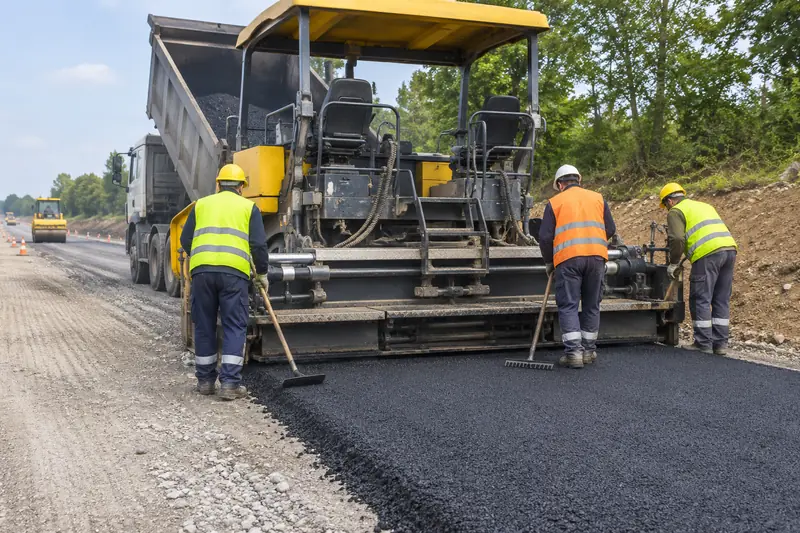
- Photo: Who chooses a drought-resilience project? by Simplifying Finance, Original editorial graphic (cropped and resized)
Figures are as reported by the companies or cited outlets as of 22 November 2026. Check the source before quoting. Corrections: let us know through the solution form.