What happened
A farmer decides what happens on a steep plot upstream. The cost of sediment reaching a reservoir or intake can appear later in the accounts of downstream water users. The people with the ability to reduce erosion and those with a financial interest in cleaner water are not necessarily the same.
The Upper Tana–Nairobi Water Fund created a mechanism for directing resources toward watershed conservation. The project brought together upstream land management and downstream water interests. Its documentation describes support for sustainable land management, and a financing plan distinguishing cash grants from contributions in kind.
The fund was launched in 2015 and the supported project became operational in January 2017. This establishes a financing mechanism and an implementation milestone. Resource commitments and modeled benefits are not audited cash savings for Nairobi. Catchment changes require evidence on sediment, rainfall, maintenance and the timing of downstream costs.
The Tana River supplies 95 percent of the water for Nairobi’s 4 million residents and another 5 million people in the watershed, and it generates half of Kenya’s hydropower. More than 300,000 smallholder farms line the river, and unsustainable practices on steep plots send sediment into it, raising water treatment costs and reducing hydropower output.
The Nature Conservancy launched the Upper Tana-Nairobi Water Fund in 2015, Africa’s first water fund, bringing together Nairobi’s water utility, businesses, government agencies and farmers. Support for farmers includes terracing, agroforestry, water pans and better irrigation methods.
By 2020, partners reported working with 26,474 farmers and aimed to reach 50,000 by 2022. The fund invests about US$1 million a year in the watershed and is building a US$7.5 million endowment to sustain its work.
A business case developed with Stanford University and The Nature Conservancy estimated the return on investment from watershed conservation for Nairobi’s water supply and hydropower, making the financial logic explicit for potential funders.
The model has inspired similar funds elsewhere in Africa, including work towards a water fund in Cape Town, South Africa.
The fund’s logic is a form of natural infrastructure investment. Instead of building larger treatment plants to remove sediment, downstream users pay to reduce erosion at its source. If the cost of conservation is lower than the savings in treatment, dredging and lost hydropower, the investment pays for itself.
Benefits for farmers are an important part of the model. Terraces and water pans can raise yields and make farms more resilient to dry spells, giving farmers their own reasons to keep practices going after support ends.
Measuring results is challenging because sediment depends on rainfall, land use across a large area and the time it takes for changes to show downstream. Long-term monitoring of river quality is therefore essential to demonstrate value to funders.
Water funds now operate in dozens of cities worldwide, from Quito to Mexico City, and the Nairobi fund has been a model for Africa.
For finance students, the case is an example of paying for ecosystem services, where those who benefit from a natural process compensate those who maintain it.
Corporate partners, including beverage and agricultural companies that depend on reliable water, have contributed to the fund, recognising that water security in the Tana basin affects their own operations.
That mix of public, private and philanthropic money is typical of water funds, which aim to align the interests of everyone who depends on the same river.
For Nairobi’s residents, the long-term benefit is a more reliable supply of cleaner water at lower treatment cost.
Its experience will help determine whether water funds can deliver measurable benefits at the scale of a major city.
Success would encourage more cities in Africa to invest upstream rather than relying only on costly treatment downstream, and would give farmers a lasting role in protecting the water that millions depend on every day.
Its results matter far beyond Kenya.
Key moments
The Nature Conservancy launches the Upper Tana-Nairobi Water Fund.
The IFAD-supported project becomes operational.
Partners report working with 26,474 farmers.
Source: The Nature Conservancy, Upper Tana-Nairobi Water Fund.
The trade-offs at the heart of the case
Reading the result
Trace a water-related benefit uphill from the city. A downstream user may value cleaner raw water or a more dependable flow. An upstream farmer decides whether to devote land and labor to a different practice, often well before any downstream benefit could be detected. A water fund connects those decisions financially. To test the connection, document the farm changes and the downstream measurements separately. A project launch or an increase in participating farms is verifiable, while avoided treatment expense requires operating records and a credible account of what would otherwise have happened.
The financing decision
Compare paying once for an initial change with financing maintenance across several seasons. A practice on one farm can succeed while its effect on a city intake is too small to identify in a short observation period. Plan for both scales of evidence.
For your seminar, paper or interview
- Q1
Which people would be missed by measuring only verified reduction in sediment reaching relevant water infrastructure?
- Q2
Who carries the cost of on-farm maintenance and catchment monitoring?
- Q3
What could the evidence on downstream changes adjusted for rainfall and other influences change?
- Payments for ecosystem services
- Watershed investment
- Public-private partnership
- Return on investment
How we would approach it
Simplifying Finance’s opinion, offered as a starting point for debate, not as fact or investment advice.
We think the water fund is a smart way for downstream users to protect their water at the source. Paying farmers to keep soil on their land is often cheaper than removing sediment later, so the model deserves steady funding and careful measurement of results.
Pay for results
Link support to measured reductions in sediment.
Keep farmers engaged
Show farmers the yield and income benefits.
Build the endowment
Secure long-term funding beyond donors.
What this plan gives up
Upstream conservation is cost-effective but benefits take years to show downstream.
The strongest counter-argument
Some argue water utilities should focus on treatment capacity, which they control directly.
Metrics to watch
- Sediment levels at intakes
- Farmers adopting conservation practices
Propose your solution
Pick a discussion question and set out what you would do, why, and what it would cost. Strong, well-argued answers are reviewed and published below with your first name and programme.
Published solutions
Loading published solutions…
- Importance of the Nairobi Water Fund | The Nature Conservancy ↗
- Upper Tana Nairobi Water Fund Project ↗
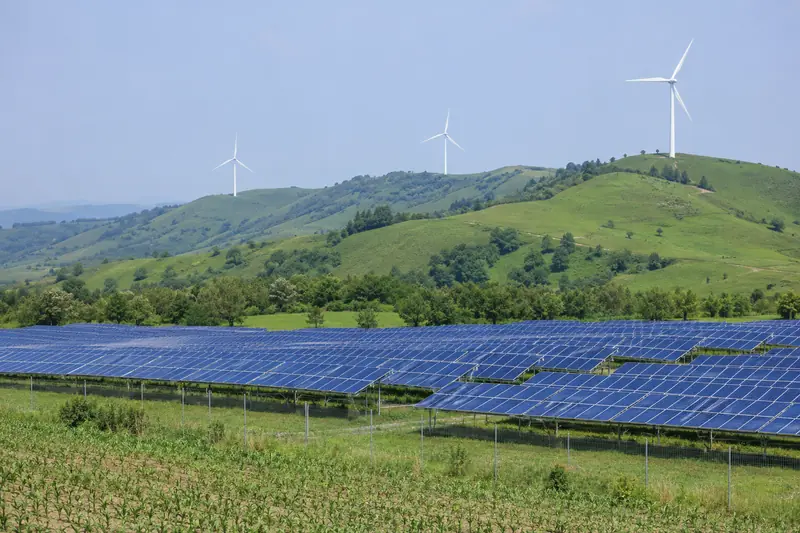
- Photo: Why would a city pay for work on an upstream farm? by Simplifying Finance, Original editorial graphic (cropped and resized)
Figures are as reported by the companies or cited outlets as of 22 November 2026. Check the source before quoting. Corrections: let us know through the solution form.