What happened
A retail supplier sells generation, local distribution and customer service in a single bill. A generator selling wholesale to the grid sells a different product at a different point of delivery. Its poles, retail staff and collection costs may no longer earn the same return. The possibility of export does not settle the purchase price, interconnection cost, quantity accepted or when payment will begin. A finance committee must ask whether a legal route to sell is also a bankable route to recover investment.
Uniform tariffs across systems make the offer easier for customers to understand. Sites face different fuel transport costs, loads and maintenance needs, however, so equal customer prices need not produce equal investor returns. A capital subsidy can narrow the gap. If its size is calculated using an optimistic load forecast or a late grid arrival assumption, the operator can still face losses. A customer should not be forced to pay inefficient prices indefinitely simply to protect an earlier forecast.
One approach sets an agreed method for valuing usable distribution assets and a transparent rule for export compensation before the developer invests. Another treats the risk as commercial and offers a higher upfront subsidy. The first requires coordination with the future grid operator. The second is simpler today but can cost more if the grid arrives early. Test both against cash flows at several arrival dates and the value customers receive from dependable power while they wait.
IDCOL began supporting solar mini-grids in remote areas such as river islands where grid extension was difficult. According to IDCOL, the government adopted a solar mini-grid guideline in 2014, and mini-grids of up to 250 kWp did not need a licence to sell electricity.
IDCOL described typical financing as a mix of grants from development partners and loans at about 6 percent interest over 10 years, with a two-year grace period. It cited a tariff of around BDT 30 per kWh, well above the national grid tariff, reflecting the higher cost of off-grid supply.
A 2017 World Bank case study described the market as small but growing, with seven mini-grids connecting about 2,243 households and 18 approved by IDCOL. A 2019 investment report counted 22 operating solar mini-grids and highlighted the need to coordinate sites with the Rural Electrification Board so they would not soon be reached by the grid.
Stranded-asset risk applies far beyond mini-grids. Any investment whose revenue depends on a market staying as it is can lose value if a cheaper alternative arrives. Investors should ask what happens to their returns if conditions change early, and whether contracts protect them. For policymakers, clear rules reduce that risk and therefore the cost of attracting private capital. Bangladesh’s experience is now studied by countries in Africa and Asia that are designing their own mini-grid rules, especially on what happens when the main grid arrives and how tariffs should be set for remote customers who have no other source of reliable power.
Key moments
Solar guidelines addressed possible future sales to the national grid.
World Bank mini-grid analysis documented tariff and transition arrangements.
Source: World Bank, World Development Indicators (EG.ELC.ACCS.RU.ZS).
The trade-offs at the heart of the case
Write the exit before the entry
At financial close, request three cash-flow schedules for an early grid arrival, an expected arrival and an arrival after the concession period. In each, specify who owns the wires, who collects retail revenue and how unused generating equipment is valued. Include the cost of installing the meter required to sell wholesale. I would favour an agreed transition formula with enforceable payment terms and a practical test of network compatibility. If a future buyer will not commit, reflect uncertainty in the allowable investment today. Promising a tariff to be negotiated later can leave both customers and the developer exposed.
Grid arrival affects a network owner differently from a household
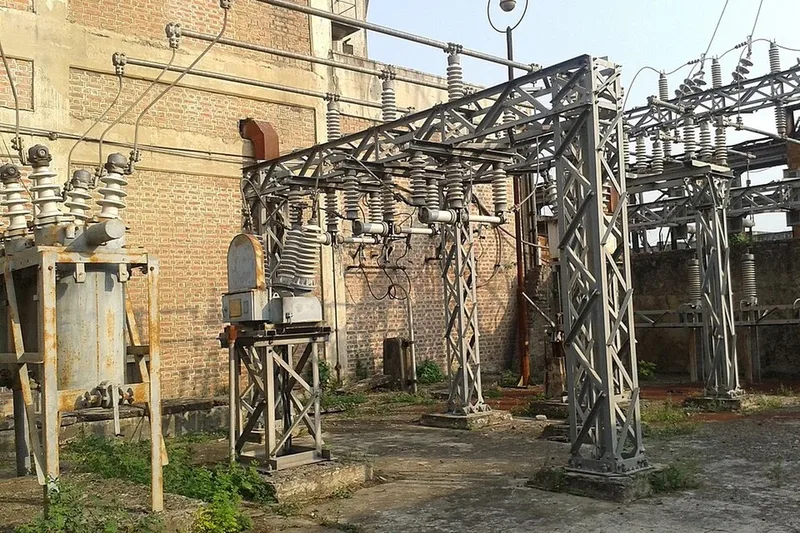
A home solar unit can keep powering a lamp independently once the public grid arrives. A mini-grid operator has a more complicated collection of assets. Some generators might export electricity, local wires might be usable by a distribution company and customer accounts might have little separate value once households switch. A single compensation rate per installed kilowatt would miss these distinctions. Commission a physical asset inventory with remaining life, compatibility and likely use under the new arrangement. Then compare a buyout with the value of continued operation and the cost of keeping the community supplied during transition. An orderly transfer is worth money if it avoids an interruption while still enabling households to receive the benefits of integration.
For your seminar, paper or interview
- Q1
Which mini-grid assets remain useful after grid arrival?
- Q2
What makes an export right bankable?
- Q3
Who should bear the cost of an earlier-than-expected connection?
- Stranded asset risk
- Regulatory planning
- Tariff design
- Project finance
How we would approach it
Simplifying Finance’s opinion, offered as a starting point for debate, not as fact or investment advice.
We think the biggest risk for mini-grid investors is not technology but the arrival of the national grid. A solar mini-grid needs years of steady revenue to repay its loans, so clear rules on what happens when the grid arrives, such as compensation or conversion into a local distributor, are essential to attract private capital.
Agree grid-arrival terms upfront
Define compensation or buy-out rules before investment.
Coordinate site selection
Choose sites with the rural electrification agency that are unlikely to get grid power soon.
Design for future connection
Build networks that can later connect to the grid and sell power both ways.
What this plan gives up
Generous protection for mini-grid operators attracts investors but can delay grid expansion or raise costs for the utility.
The strongest counter-argument
Some argue that as the national grid reaches nearly every village, public money should focus on grid reliability rather than mini-grids that may soon become redundant.
Metrics to watch
- Mini-grids still operating after grid arrival
- Average tariff per kWh compared with grid tariff
Propose your solution
Pick a discussion question and set out what you would do, why, and what it would cost. Strong, well-argued answers are reviewed and published below with your first name and programme.
Published solutions
Loading published solutions…
- World Bank ESMAP: Bangladesh mini-grid country case study, 2017 ↗
- World Bank: Mini-grid tariff regulation and Bangladesh price-cap example ↗
- World Bank: World Development Indicators, Rural access to electricity ↗
- World Bank/ESMAP: Mini grids in Bangladesh, a case study of an incipient market ↗
- ESMAP: Scaling successful mini-grid programs, experience of Bangladesh (IDCOL) ↗
- ESMAP: IDCOL solar mini-grid project key features (2020) ↗
- CDKN: Solar mini-grids investment case, Bangladesh (2019) ↗
- Photo: Sandwip Ferry Ghat.jpg by Shahidul Hasan Roman, CC BY-SA 3.0 (cropped and resized) ↗
Figures are as reported by the companies or cited outlets as of 22 November 2026. Check the source before quoting. Corrections: let us know through the solution form.