What happened
The World Bank describes an unfunded municipal treatment plan and Cerro Verde’s need for additional water during its expansion planning in 2012. The La Enlozada arrangement combined collection, treatment and pumping with access to treated water for the mine. Before the project, a substantial share of the city’s wastewater entered the Chili River untreated. The financing question was whether the arrangement delivered better value than separate municipal treatment and industrial supply projects.
Draw two budgets. The city values cleaner water, service continuity and avoided spending on another treatment solution. The mine values dependable water delivered at the operating site. Its alternative might involve purchasing different water, transporting it farther or limiting ore processing. One party’s avoided payment is not necessarily a social saving. By contrast, avoiding duplicate infrastructure can save resources regardless of who finances it. Treatment and reuse must also be matched by hour and quality. A nominal cubic metre at the plant is of limited use if a pump or pipeline cannot deliver it.
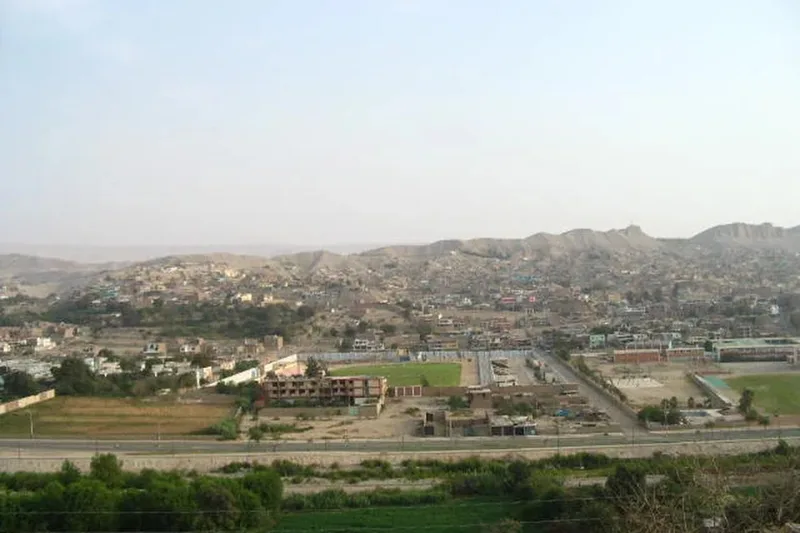
Arequipa, Peru’s second-largest city, long discharged most of its untreated sewage into the Chili River, which also supplies water to farms downstream. The city’s water utility, SEDAPAR, had plans for treatment but lacked funding.
Cerro Verde, the large copper mine operated by Freeport-McMoRan near Arequipa, needed more water for a major expansion. Although it already recycled much of its process water, its owners sought an additional, reliable source.
The solution was the La Enlozada wastewater treatment system. Cerro Verde financed its construction, and the plant began operating in 2015. It treats more than 95 percent of Arequipa’s wastewater at no cost to residents, and part of the treated water is reused in the mine’s operations.
Cerro Verde also operates and maintains the plant. In 2026 Freeport said the Chili River, once heavily polluted by urban wastewater, was showing measurable improvement.
The partnership was extended in a later framework agreement. Cerro Verde committed to continue covering operating and maintenance costs and to invest US$363 million in water and sanitation projects, including gradually expanding La Enlozada to 2,800 litres per second. If capacity is exceeded, it would build a new system for an extra 1,200 litres per second, at about US$419 million, under Peru’s works-for-taxes scheme.
Including earlier investments and decades of operation, the company says its commitments exceed US$3 billion.
The case shows how a company’s need can align with a public need. The mine’s alternative water sources would have been costly, while the city’s alternative was continued pollution or a large public investment.
Similar arrangements, in which mines or factories fund municipal water infrastructure in exchange for treated water, are being explored in water-stressed regions from Chile to India.
The arrangement also affects how the mine is perceived locally. By financing a public service at no cost to residents, Cerro Verde sought to strengthen its social licence to operate in a region where mining has often been contentious.
Critics have argued that the utility gave up too much in negotiations over treated water. Such debates show that even beneficial partnerships require careful governance and transparency.
Water is becoming one of the most important constraints on mining in arid regions. In southern Peru and northern Chile, companies increasingly turn to treated wastewater and desalination to avoid competing with farms and cities for scarce fresh water.
Peru is one of the world’s largest copper producers, and mining accounts for a large share of its exports. Decisions about how mines are financed, expanded and operated therefore matter for national income, government revenue and regional development, not only for the companies involved.
Copper demand is expected to rise with electric vehicles, renewable energy and power grids, which increases the importance of reliable new supply. At the same time, mining projects in Peru and elsewhere face growing expectations from communities and regulators on water, land and benefit-sharing.
For a finance student, the case is a reminder to separate the headline figures in announcements from the cash flows that determine value: who pays, when, and what is received in return.
The arrangement also shows how a company can turn a cost into an investment with a measurable return: reliable water for production and a stronger relationship with its host city.
Key moments
Arequipa’s utility had an unfunded treatment proposal.
Additional industrial water demand created an opportunity to combine treatment with reuse.
Sources: Energiminas and Cerro Verde summaries of the framework agreement.
The trade-offs at the heart of the case
Who pays for a dependable water supply?
La Enlozada connects a city’s wastewater to industrial demand. PROVISUR treats seawater for coastal households. Both appraisals improve when they follow a measured cubic metre through treatment, delivery and payment, then assign the public benefit separately from contractual revenue.
Our assessment
I would request records of both treated discharge quality and water delivered to the mine during supply stress. Specify who pays for repairs when one service continues but the other is interrupted. Compare the arrangement with the least expensive feasible solution for each party, then ask whether responsibilities remain clear as the city grows or mine demand changes.
For your seminar, paper or interview
- Q1
Which public benefits can the water utility collect through its tariff?
- Q2
Who should bear the cost of pumping downtime?
- Q3
What happens to the city’s service if the mine needs less water?
- Q4
How would the decision change if the two adverse events were correlated or could occur together?
- Q5
What additional value should the decision maker assign to avoiding a cash shortage during the severe event?
- Shared infrastructure
- Water reuse
- Public-private partnership
- Social licence
How we would approach it
Simplifying Finance’s opinion, offered as a starting point for debate, not as fact or investment advice.
We think the La Enlozada arrangement is a strong example of shared value. The mine gained a reliable water source for its expansion, while Arequipa gained wastewater treatment it could not fund on its own, and the Chili River has measurably improved.
Write long contracts
Agree clear terms for decades of operation.
Share water fairly
Balance mine and city needs in droughts.
Report results
Publish water quality data regularly.
What this plan gives up
The deal secures water for the mine but ties a city service to a private company.
The strongest counter-argument
Some local critics argue the utility conceded too much in negotiations.
Metrics to watch
- Share of city wastewater treated
- Chili River water quality
Propose your solution
Pick a discussion question and set out what you would do, why, and what it would cost. Strong, well-argued answers are reviewed and published below with your first name and programme.
Published solutions
Loading published solutions…
- World Bank — Wastewater reuse and Cerro Verde in Arequipa ↗
- NITI Aayog — Reuse of treated water in Arequipa, Peru ↗
- Freeport-McMoRan • Cerro Verde recognized for Chili River restoration (2026) ↗
- World Bank • Water in mining case study (Cerro Verde) ↗
- Energiminas • Cerro Verde to invest over US$1,292 million in water projects (2026) ↗
- Cerro Verde • La Enlozada agreement summary ↗
- Photo: Cerro Verde mine Peru by NASA Operational Land Imager (OLI) on Landsat 8, Public domain (cropped and resized) ↗
Figures are as reported by the companies or cited outlets as of 22 November 2026. Check the source before quoting. Corrections: let us know through the solution form.