What happened
Minsur’s 2018 report records the closing of US$900 million of project financing and the board’s approval of agreements supporting its obligations. It also records the sale of 40% of Cumbres Andinas, which controlled Marcobre, to Alxar. The percentage applies at the named holding company. The financing describes a facility for the copper development. Adding the face amount of the loan to the value of the equity sale would combine two transactions with different recipients and claims.
Trace the flow of funds through the sponsor, holding company and project. Record draw requirements, lender priority, interest during construction and the point at which operating revenue becomes distributable. A capital contribution by a partner can improve lender protection while leaving sponsor guarantees in force until completion tests are passed. An engineering delay affects both the date of first revenue and the length of the period over which financing costs accumulate.
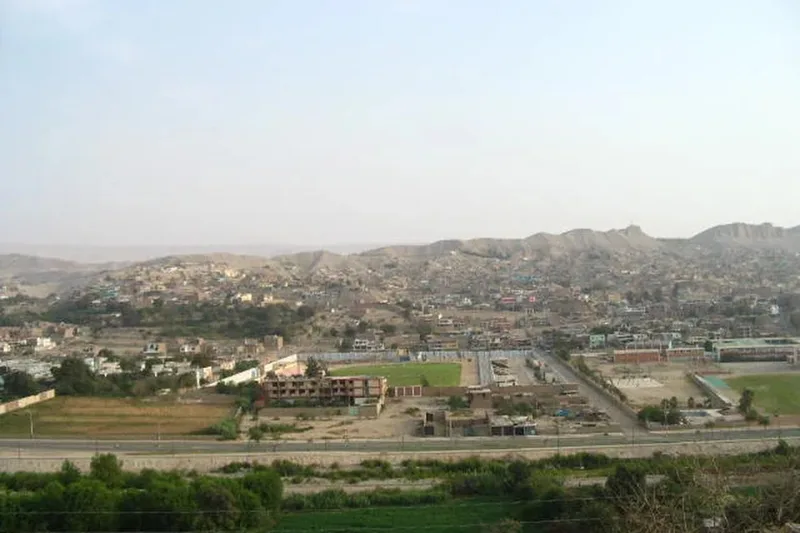
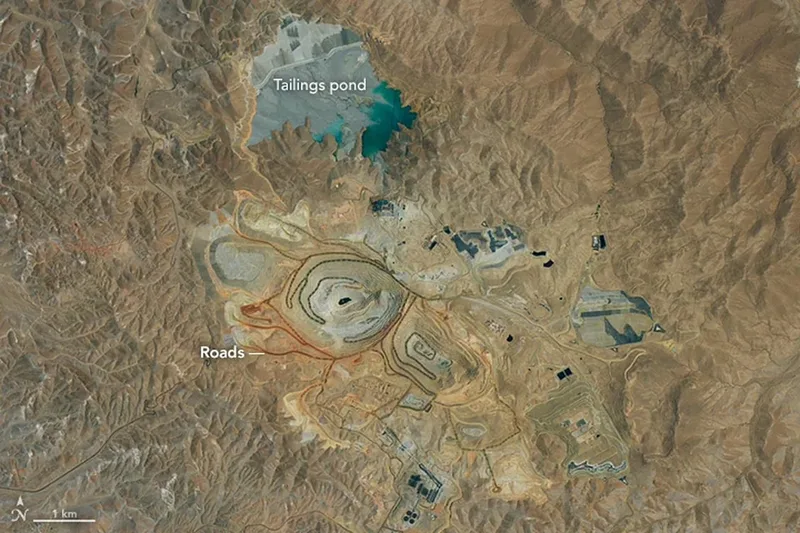
Mina Justa is an open-pit copper mine near Marcona, in the Ica region on Peru’s southern coast, about 400 kilometres south-east of Lima. It is owned by Marcobre, which is controlled by Minsur, part of Peru’s Breca Group.
In 2018, Minsur sold 40 percent of Cumbres Andinas, the holding company that controls Marcobre, to Alxar, a subsidiary of Chile’s Empresas Copec. Minsur kept 60 percent.
In the same year, Marcobre secured US$900 million of project financing, allowing construction to begin. The total investment was put at about US$1.6 billion.
The mine was designed to process 12 million tonnes of oxide ore and 6 million tonnes of sulphide ore a year, producing about 102,000 tonnes of copper in concentrate and 58,000 tonnes of copper cathode annually.
Despite the pandemic, construction was completed in early 2021 and the mine came into operation in April that year. Its first shipment of concentrate left the port of Matarani in July 2021.
Mina Justa marked Empresas Copec’s debut in large-scale mining. For Minsur, previously known mainly as Peru’s only tin miner, it was a major diversification into copper.
Project finance allows a mine to borrow against its own future cash flows. Lenders typically require sponsor guarantees until the project passes completion tests, after which the loan relies on the mine’s performance.
The structure used at Mina Justa is common for mining and infrastructure projects worldwide, where large upfront costs are repaid from decades of operating revenue.
Copec paid about US$168.5 million for its 40 percent stake in Cumbres Andinas in 2018. Its investment brought both capital and a partner with long-term interest in copper.
The mine’s production cost was estimated at about US$1.40 per pound, helped by its location near a major highway and ports on the southern coast, which reduces transport costs.
Minsur has since announced plans for an underground extension, Justa Subterránea, to extend production, showing how a successful first phase can create options for further investment.
For students, the case illustrates the difference between equity and debt in project funding. Equity partners share in profits and losses; lenders receive fixed payments and have priority if the project fails, but limited upside if it succeeds.
Peru is one of the world’s largest copper producers, and mining accounts for a large share of its exports. Decisions about how mines are financed, expanded and operated therefore matter for national income, government revenue and regional development, not only for the companies involved.
Copper demand is expected to rise with electric vehicles, renewable energy and power grids, which increases the importance of reliable new supply. At the same time, mining projects in Peru and elsewhere face growing expectations from communities and regulators on water, land and benefit-sharing.
For a finance student, the case is a reminder to separate the headline figures in announcements from the cash flows that determine value: who pays, when, and what is received in return.
The mine’s location on the coast, unlike many high-altitude Andean projects, reduced logistical challenges and contributed to its competitive cost position.
Its success also improved Minsur’s ability to finance further growth, since an operating mine with steady cash flow is a stronger base for borrowing than a development project.
It also produces two products, copper concentrate and high-purity copper cathode, which gives the operation flexibility in selling to smelters and to manufacturers directly.
That product mix reduces reliance on a single type of customer.
Key moments
Minsur reported selling a 40% interest in Cumbres Andinas.
Minsur recorded the closing of US$900 million in project financing.
Sources: Minsur 2018 report; Andina and Empresas Copec.
The trade-offs at the heart of the case
A shareholder’s promise to pay
At Quellaveco, issuing project-company shares redistributed the development bill. At Mina Justa, the ownership transaction and the financing close occurred at different levels of the group. Drawing both structures side by side reveals which participant would actually receive a contractor’s call for money.
Our assessment
I would judge the facility by its ability to carry the development to a credible operating test under a delayed ramp, alongside the sponsors’ capacity to support it. The bank should ask who supplies the next dollar when remaining committed funds equal the remaining construction budget but do not yet cover working capital.
For your seminar, paper or interview
- Q1
What separates committed credit from drawable funds?
- Q2
Where in the corporate structure was the 40% interest sold?
- Q3
What completion test would justify releasing sponsor support?
- Q4
How far before the projected low point must a funding commitment become unconditional?
- Q5
Which payment could be rescheduled without weakening the receipts expected later in the forecast?
- Project finance
- Joint ventures
- Completion guarantees
- Copper projects
How we would approach it
Simplifying Finance’s opinion, offered as a starting point for debate, not as fact or investment advice.
We think Mina Justa shows how a mid-sized company can develop a major copper mine by combining a partner’s equity with project finance. Bringing in Copec as a 40% partner spread the risk, while the US$900 million loan funded much of construction.
Match debt to cash flow
Size loans to expected output.
Keep guarantees short
Release sponsor support after completion.
Choose committed partners
Bring in partners with long-term goals.
What this plan gives up
Project finance spreads risk but adds lender controls and costs.
The strongest counter-argument
Some argue full equity funding would have given owners more flexibility.
Metrics to watch
- Production versus design
- Debt repayment schedule
Propose your solution
Pick a discussion question and set out what you would do, why, and what it would cost. Strong, well-argued answers are reviewed and published below with your first name and programme.
Published solutions
Loading published solutions…
- Minsur — 2018 annual report ↗
- Minsur — Consolidated financial statements, Mina Justa financing ↗
- Empresas Copec via MarketScreener • Mina Justa first shipment (2021) ↗
- Andina • Mina Justa investment to reach US$1.6 billion (2018) ↗
- NS Energy • Mina Justa copper project ↗
- Photo: San Nicolas Marcona by Maximoelheroe, CC BY-SA 3.0 (cropped and resized) ↗
Figures are as reported by the companies or cited outlets as of 22 November 2026. Check the source before quoting. Corrections: let us know through the solution form.