What happened
Hudbay described securing the final land-user agreements required for development and subsequently reported first production at Pampacancha in April 2021. The deposit sits near the existing Constancia operation. Hudbay’s quarterly operating account also notes that comparative 2020 performance was affected by an extended interruption. Simply assigning all subsequent improvement in reported output to the new deposit would mix a change of feed with the normalisation of operations.
Value a day of mill time under two alternative blends. Compare payable copper and by-products, recovery, transport, hardness and processing cost. A higher grade can be offset if harder material cuts throughput. If the displaced material is preserved in a stockpile, its value may be delayed rather than entirely lost. A schedule with an eventual mill closure or an already full future year makes recovering that displaced value more difficult.
Take one week in which the mill is already fully scheduled. Write down the original ore blocks, their expected recovered copper and any payable by-products. Replace a defined block with satellite material and recalculate the whole week. If the displaced block remains economic, show when it will be processed later and what other block it might displace then. If it never returns, the lost contribution is permanent. Stockpile reclaim and haulage also use equipment and working capital. Repeating this across several weeks produces a materially different answer from valuing the satellite deposit as if a free mill were waiting. Adjust any historical comparison for periods affected by the earlier suspension before attributing a change in output to the new feed.
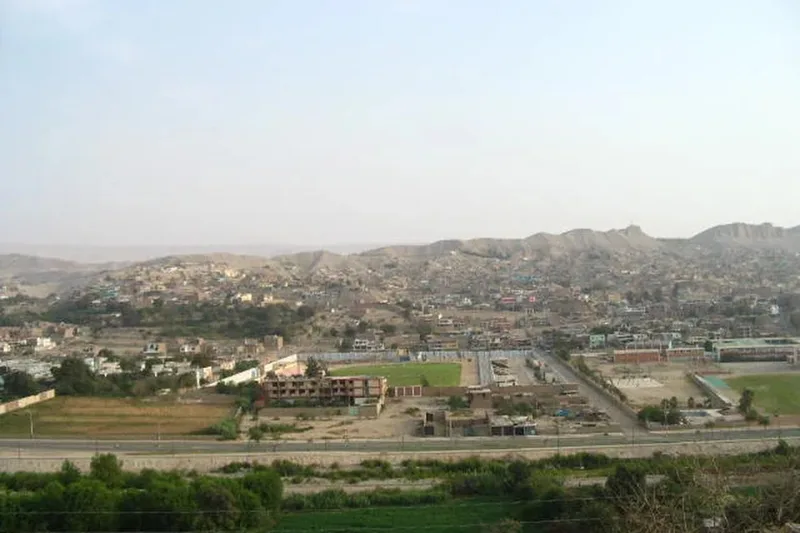
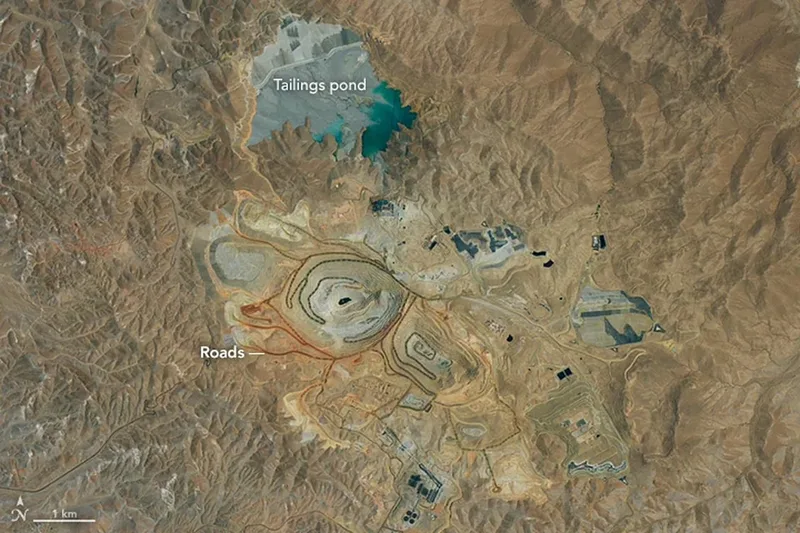
Constancia is a copper mine in the Cusco region of southern Peru, operated by Canada’s Hudbay Minerals. It reached commercial production in the second quarter of 2015 and processes ore through a large concentrator.
Pampacancha is a satellite deposit nearby with higher copper and gold grades. Developing it allowed Hudbay to feed richer ore into the existing Constancia mill, increasing metal output without building a new plant.
Before development, Hudbay had to secure agreements with land users in the area. After reaching the final agreements, it reported first production at Pampacancha in April 2021.
Hudbay’s operating reports noted that 2020 performance had been affected by an extended interruption, which means that comparing 2021 with 2020 overstates the effect of the new deposit alone.
The economics of a satellite deposit depend on what it displaces. Every tonne of Pampacancha ore processed takes mill time that could have been used for Constancia ore, so the value is the difference between the two.
If displaced ore is stockpiled for later processing, its value is delayed rather than lost. But if the mill has a fixed closure date or is already full in later years, some of that value may never be recovered.
This kind of analysis, comparing the value of alternative uses of a scarce resource, is the essence of opportunity cost.
Mining companies worldwide use satellite deposits to extend mine life and improve grades at existing operations, making better use of infrastructure already built.
The results were significant. Constancia’s copper production rose to 77,813 tonnes in 2021 and 89,395 tonnes in 2022, while gold production in 2021 rose by more than 300 percent, helped by higher grades from Pampacancha.
Hudbay also released an updated mine plan in 2021 that raised expected copper and gold production between 2022 and 2024 because of the higher grades from Pampacancha.
Developing Pampacancha required a formal prior consultation process with indigenous communities under Peru’s Consulta Previa law, completed at the end of 2020, before regulators granted the final permit in January 2021.
Peru is one of the world’s largest copper producers, and mining accounts for a large share of its exports. Decisions about how mines are financed, expanded and operated therefore matter for national income, government revenue and regional development, not only for the companies involved.
Copper demand is expected to rise with electric vehicles, renewable energy and power grids, which increases the importance of reliable new supply. At the same time, mining projects in Peru and elsewhere face growing expectations from communities and regulators on water, land and benefit-sharing.
For a finance student, the case is a reminder to separate the headline figures in announcements from the cash flows that determine value: who pays, when, and what is received in return.
The higher grades also lowered unit costs, because the same mill and workforce produced more metal, a clear example of operating leverage at work.
Key moments
Hudbay secured the remaining land-user agreements needed for pit development.
The company reported initial production from Pampacancha.
Source: Hudbay quarterly results (Form 6-K filings).
The trade-offs at the heart of the case
The next tonne through a full mill
Toromocho planned to add process capacity. At Constancia, Pampacancha offered different material for an existing mill. In the first case the marginal tonne may be extra feed. In the second it may replace other feed with its own economic value.
Our assessment
I would track the contribution per constrained mill hour as well as metal production. The local agreements are an enabling event with their own obligations. Their completion does not justify assigning the new ore an uninterrupted lifetime of access without considering those terms, the mine plan and the remaining capacity at Constancia.
For your seminar, paper or interview
- Q1
Which material loses mill time when Pampacancha ore arrives?
- Q2
Why is 2020 an awkward comparison year?
- Q3
How should deferred stockpile value enter the calculation?
- Q4
Which observations would verify demand at the time and location the capacity is available?
- Q5
Would a smaller fixed commitment or a guaranteed unit margin give better downside protection?
- Ore blending
- Satellite deposits
- Community agreements
- Production planning
How we would approach it
Simplifying Finance’s opinion, offered as a starting point for debate, not as fact or investment advice.
We think Pampacancha was a valuable addition to Constancia because higher-grade ore could make better use of existing mill capacity. But attributing all later improvement to the new deposit would ignore the recovery from earlier interruptions.
Compare ore blends
Value mill time under different feeds.
Honour agreements
Keep land-user commitments.
Preserve stockpiles
Retain displaced ore for later processing.
What this plan gives up
Higher-grade ore lifts output but may displace other material.
The strongest counter-argument
Some argue satellite deposits create new community and environmental risks.
Metrics to watch
- Copper grade processed
- Mill throughput
Propose your solution
Pick a discussion question and set out what you would do, why, and what it would cost. Strong, well-argued answers are reviewed and published below with your first name and programme.
Published solutions
Loading published solutions…
- Hudbay — Second-quarter 2021 management discussion and analysis ↗
- Hudbay — Commencement of Pampacancha pit development ↗
- Hudbay • Q4 2021 results (Form 6-K) ↗
- Hudbay • Q4 2022 results (Form 6-K) ↗
- Hudbay • Form 40-F FY2022 ↗
- Photo: Collpatomaico footbridge by Bridges to Prosperity, CC BY-SA 3.0 (cropped and resized) ↗
Figures are as reported by the companies or cited outlets as of 22 November 2026. Check the source before quoting. Corrections: let us know through the solution form.