What happened
Buenaventura’s historical San Gabriel project description cites measured and indicated resources of 7.7 million tonnes at 5.7 grams of gold per tonne as of December 2016, alongside a separate inferred estimate. It also records approval of the environmental impact assessment in March 2017. Using 31.1035 grams per troy ounce, the first pair implies roughly 1.41 million contained ounces, consistent with the rounded resource disclosure. The calculation establishes units and arithmetic; it does not establish how much can be mined economically.
A lender needs a production schedule based on suitable engineering evidence, dilution, mining recovery and plant recovery. A technically recoverable ounce still earns revenue only after refining and commercial deductions. High-altitude logistics change both timing and cost. The inferred category requires separate treatment, since applying the same certainty to every estimated tonne would overstate what the drilling programme established.
A lender’s question about a promising resource is usually a timing question in disguise. Which mine development opens the first available ore, when can the mill treat it and on what date will the metal buyer pay? A resource inventory does not answer any of those questions. Begin with a schedule at the level of a development area and apply the planned mine recovery, dilution and processing recovery on their proper bases. A tonne left underground, a tonne added as dilution and a gram lost in processing affect different stages of the calculation. Then allow for settlement terms. A mine can contain ample metal and still require more equity if the first sizeable receipts arrive after the debt starts amortising.
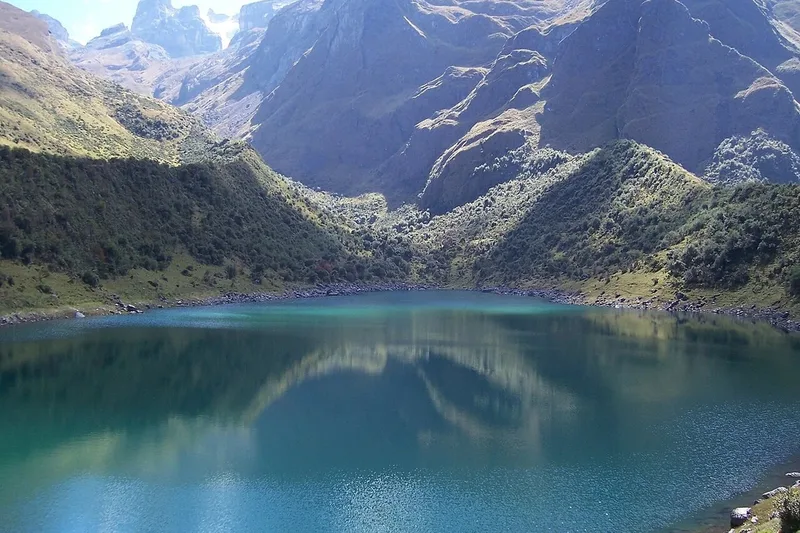
San Gabriel is a gold project in the Moquegua region of southern Peru, owned by Compañía de Minas Buenaventura, the country’s largest publicly traded precious metals miner.
Buenaventura’s project description cited measured and indicated resources of 7.7 million tonnes at 5.7 grams of gold per tonne as of December 2016, and the environmental impact assessment was approved in March 2017.
Converting a resource into a mine took many more years. The project was later described as having 1.9 million ounces of reserves, a 14-year mine life and expected production of about 150,000 ounces of gold a year at full capacity.
Construction progressed through 2024 and 2025. By the middle of 2025 the project was 88 percent complete, with total capital expenditure of US$588 million to date and total project guidance of US$720 million to US$750 million.
The start-up was pushed back from the third to the fourth quarter of 2025. In December 2025, Buenaventura announced that San Gabriel had produced its first doré bar during commissioning.
The company expects to reach a processing rate of 2,000 tonnes a day in 2026, within a nameplate capacity of 3,000 tonnes a day, with 2026 production guidance of 70,000 to 80,000 ounces of gold.
The case illustrates why resources and reserves are classified differently. Measured and indicated resources have more geological confidence than inferred resources, but only reserves are supported by economic studies showing they can be mined profitably.
Gold projects worldwide follow a similar path from discovery to production, often taking a decade or more.
Buenaventura’s capital spending reflected the project’s priority. In 2024, US$291 million of its US$378 million total capital expenditure went to San Gabriel.
The company expects San Gabriel to become its main gold-producing asset, replacing output from older mines that are depleting.
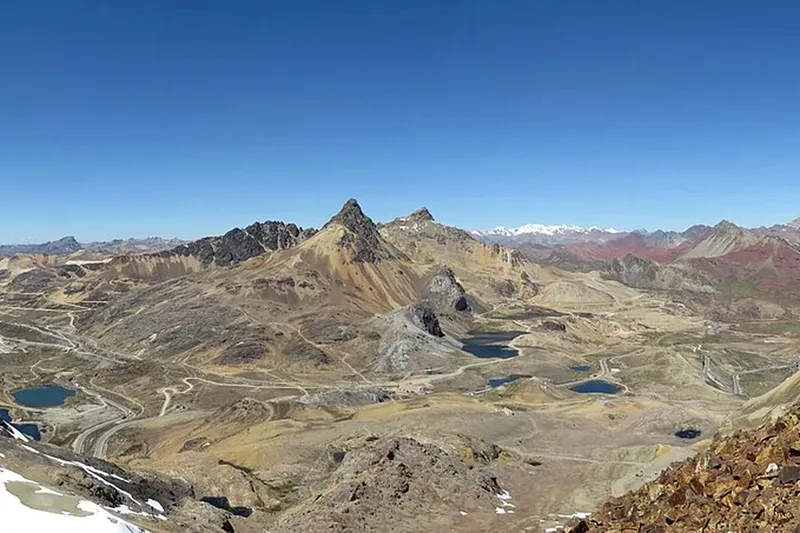
High-altitude projects in the Andes face particular challenges: harsh weather, long supply routes and the need for specialised equipment and housing for workers, all of which add to costs.
Peru is one of the world’s largest copper producers, and mining accounts for a large share of its exports. Decisions about how mines are financed, expanded and operated therefore matter for national income, government revenue and regional development, not only for the companies involved.
Copper demand is expected to rise with electric vehicles, renewable energy and power grids, which increases the importance of reliable new supply. At the same time, mining projects in Peru and elsewhere face growing expectations from communities and regulators on water, land and benefit-sharing.
For a finance student, the case is a reminder to separate the headline figures in announcements from the cash flows that determine value: who pays, when, and what is received in return.
Key moments
Date of the measured and indicated resource statement used in this case.
San Gabriel’s environmental impact assessment was approved.
Source: Buenaventura project description cited in the case.
The trade-offs at the heart of the case
Move from geological evidence to a saleable unit
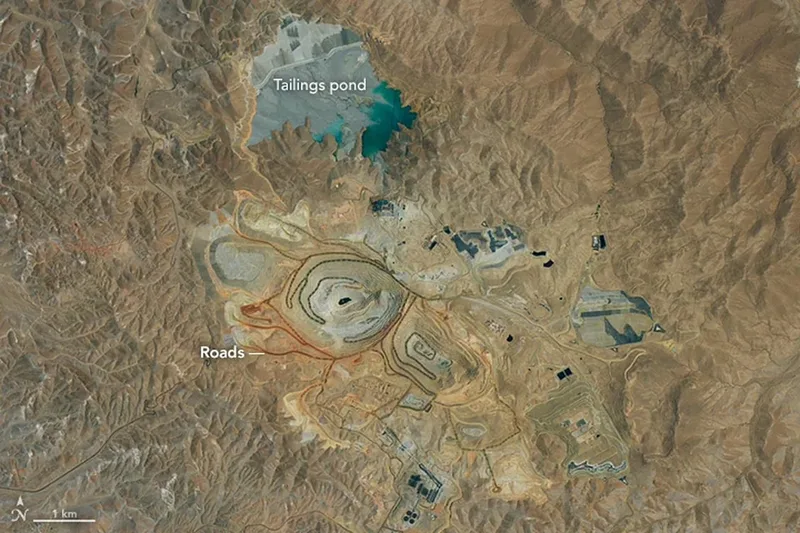
At San Rafael, past processing determined what remained in the tailings. At San Gabriel, a resource statement described mineralisation before a lending case had been constructed. In both settings the analyst must trace recovery, timing and payment before attaching a metal price to reported tonnes.
Our assessment
I would ask the developer to identify the next evidence that could shift an ounce from the geological inventory into the financable plan. Put a value on obtaining that evidence and preserve a stop decision if the result disappoints. A permit and a resource estimate can both be genuine achievements without proving the same thing.
For your seminar, paper or interview
- Q1
How would you reconcile the rounded contained-ounce figure?
- Q2
Which deductions separate a resource ounce from a payable ounce?
- Q3
What result from further work would change the lender’s maximum advance?
- Q4
What would you need to observe for the next commitment to become irreversible?
- Q5
How would a weaker signal, or a lost selling season during testing, change the value of waiting?
- Resource classification
- Project development
- Gold mining
- Capital budgeting
How we would approach it
Simplifying Finance’s opinion, offered as a starting point for debate, not as fact or investment advice.
We think San Gabriel shows the long road from a resource estimate to a producing mine. The deposit was well defined by 2016, but it took almost a decade and over US$700 million to produce the first gold, which is why resources must be valued with caution.
Separate resource categories
Value inferred ounces more cautiously.
Plan logistics
Account for high-altitude costs.
Track capex
Compare spending with guidance.
What this plan gives up
A high-grade resource promises strong returns but takes years to convert.
The strongest counter-argument
Some argue gold price rises since 2016 have made the project more valuable than first expected.
Metrics to watch
- Capital spending versus guidance
- Gold production ramp-up
Propose your solution
Pick a discussion question and set out what you would do, why, and what it would cost. Strong, well-argued answers are reviewed and published below with your first name and programme.
Published solutions
Loading published solutions…
- Buenaventura — San Gabriel project profile ↗
- Ministry of Energy and Mines — Construction project portfolio ↗
- BNamericas • Buenaventura pushes back start of San Gabriel to 4Q25 ↗
- Business Wire • Buenaventura produces its first doré bar at San Gabriel (Dec 2025) ↗
- Motley Fool • Buenaventura Q2 2025 earnings call ↗
- Photo: Distrito de Ichuña by Denischambilla, CC BY-SA 4.0 (cropped and resized) ↗
Figures are as reported by the companies or cited outlets as of 22 November 2026. Check the source before quoting. Corrections: let us know through the solution form.