What happened
In September 2022 Newmont announced that it would delay a full-funds decision on Yanacocha Sulfides, then targeting the second half of 2024. Later disclosures described further deferral. The 2024 date in the original announcement was a decision window rather than a commitment to start producing. At the September decision point the choice was how much to spend preserving the option while labour, equipment and market conditions remained uncertain.
Compare immediate construction with a genuinely executable deferred plan. Delay postpones possible revenue and can require site care, engineering updates and agreements to keep key resources available. It may also avoid ordering expensive equipment before costs settle or technical evidence improves. A valuation giving the company the benefit of waiting after bad news but no cost of waiting after good news will systematically favour deferral.
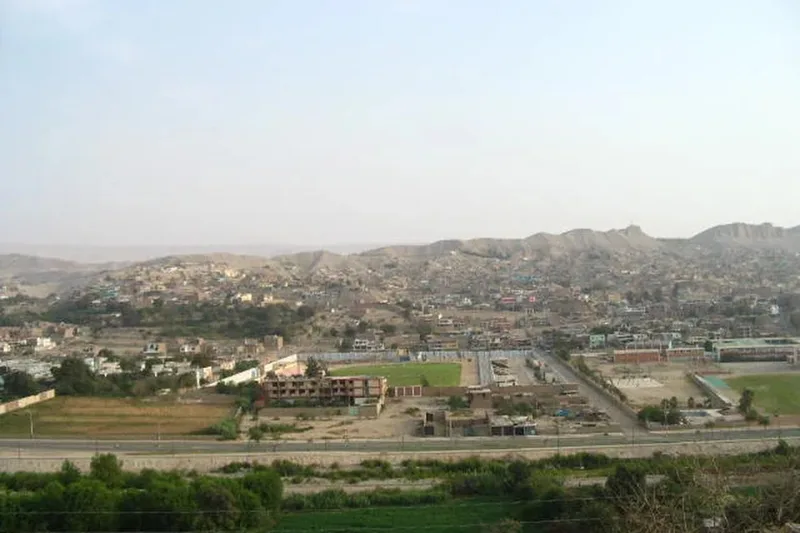
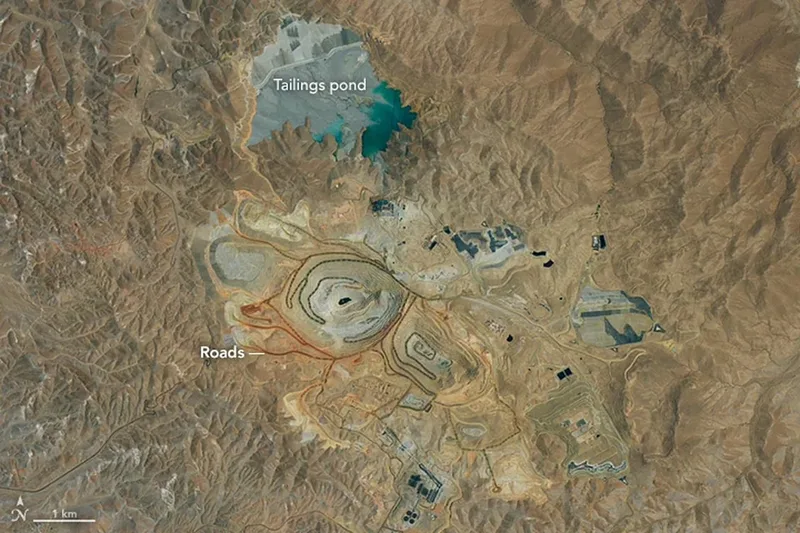
Yanacocha, in the Cajamarca region of northern Peru, was once South America’s largest gold mine. As its oxide ore declined, the owners studied Yanacocha Sulfides, a project to process deeper sulphide ore containing gold, copper and silver.
Newmont became the sole owner of Yanacocha in 2022 after acquiring the stakes held by its partners.
In September 2022, Newmont announced it would delay a full-funds decision on Yanacocha Sulfides, then targeting the second half of 2024. Later disclosures described further deferral.
The decision came as mining companies faced sharply rising costs for labour, equipment and materials after the pandemic, along with uncertainty about future metal prices.
Deferral can be understood through real options. A company that owns a project can choose when to build it. Waiting can be valuable when costs or prices are uncertain, because new information may make the decision clearer.
But waiting is not free. The site must be maintained, studies updated and agreements with communities kept in place, and revenue is postponed.
A valuation that counts the benefit of waiting after bad news but ignores the cost of waiting after good news will always favour delay, which is why careful scenario analysis matters.
Mining companies worldwide regularly defer large projects in response to cost inflation, and the timing of those decisions can shape returns for decades.
Yanacocha’s history also shapes the decision. The mine has faced community opposition in the past, most notably over the nearby Conga project, which was suspended in 2011 after protests. Any major new investment must therefore consider social as well as financial risk.
For Newmont, Yanacocha Sulfides competes for capital with projects in other countries. Deferring it allows the company to prioritise projects with higher expected returns or lower risk.
The project would extend Yanacocha’s life by processing sulphide ore containing gold, copper and silver, shifting the mine from mainly gold to a mix of metals.
For students, the case is a practical introduction to real options, an approach that treats the right to delay, expand or abandon a project as a source of value in itself.
Deferral decisions are also influenced by a company’s balance sheet. When cash is needed for dividends, debt reduction or acquisitions, large projects with long payback periods may be pushed back even if they are attractive in the long run.
Peru is one of the world’s largest copper producers, and mining accounts for a large share of its exports. Decisions about how mines are financed, expanded and operated therefore matter for national income, government revenue and regional development, not only for the companies involved.
Copper demand is expected to rise with electric vehicles, renewable energy and power grids, which increases the importance of reliable new supply. At the same time, mining projects in Peru and elsewhere face growing expectations from communities and regulators on water, land and benefit-sharing.
For a finance student, the case is a reminder to separate the headline figures in announcements from the cash flows that determine value: who pays, when, and what is received in return.
Investors watch such decisions closely because they signal how management balances near-term returns against long-term growth, a trade-off at the heart of capital allocation in every industry.
For the Cajamarca region, the timing also matters, because jobs, local purchasing and tax revenue linked to a new project are deferred along with the investment itself, which can affect support for the company in the meantime.
Key moments
Newmont delayed the full-funds investment decision.
The decision window targeted in the 2022 announcement, subsequently subject to further deferral.
Source: Newmont disclosures cited in the case.
The trade-offs at the heart of the case
Two rights over future mining cash flows
Antamina secured an environmental amendment supporting a longer operating life. Newmont deferred a full-funding decision at Yanacocha. One decision extended the horizon in which value could be earned. The other preserved discretion over whether to commit capital in the first place.
Our assessment
I would fund information that can realistically change the proposed design or the investment decision. For each retained commitment ask what right would be lost if it lapsed, when the next useful observation will arrive and what restarting would cost. Give management an explicit abandonment alternative. Otherwise the word option can disguise a series of small commitments that add up to an irreversible project.
For your seminar, paper or interview
- Q1
What makes a revised decision date different from a production date?
- Q2
Which expenditures preserve a valuable option?
- Q3
What observation would justify abandoning the project despite money already spent?
- Q4
What would you need to observe for the next commitment to become irreversible?
- Q5
How would a weaker signal, or a lost selling season during testing, change the value of waiting?
- Real options
- Capital allocation
- Project deferral
- Gold mining
How we would approach it
Simplifying Finance’s opinion, offered as a starting point for debate, not as fact or investment advice.
We think deferring Yanacocha Sulfides was a reasonable decision given rising costs and uncertainty. Waiting preserves the option to build later, but it is not free: site care, engineering updates and delayed revenue all have costs.
Value the option
Compare build-now and wait scenarios.
Keep the project ready
Maintain studies and permits.
Set clear triggers
Define the conditions for restarting.
What this plan gives up
Delay avoids building at high cost but postpones revenue.
The strongest counter-argument
Some argue delay risks losing skilled people and community support.
Metrics to watch
- Capital cost estimates
- Gold and copper prices
Propose your solution
Pick a discussion question and set out what you would do, why, and what it would cost. Strong, well-argued answers are reviewed and published below with your first name and programme.
Published solutions
Loading published solutions…
- Newmont — Yanacocha Sulfides project delay ↗
- Newmont — 2024 Form 10-K ↗
- Newmont — Earlier investment deferral ↗
- Photo: Yanacocha-Goldmine by Euyasik, CC BY-SA 4.0 (cropped and resized) ↗
Figures are as reported by the companies or cited outlets as of 22 November 2026. Check the source before quoting. Corrections: let us know through the solution form.